Within Sea Spray
How Bad Weather Shrinks Laser Range
Rain, spray, haze, and turbulence do not make lasers useless, but they can shrink range and force longer dwell times.
On this page
- Delivered energy versus advertised power
- Dwell time against fast threats
- Why lasers stay in layered defence

Page outline Jump by section
Introduction
Bad maritime weather does not suddenly render naval lasers ineffective, but it can reduce practical engagement range from the system’s advertised potential to a much smaller tactical envelope. The key issue is not whether a laser can reach a target through rain, spray or haze. It is whether enough energy arrives on target quickly enough to achieve the desired effect before the target escapes, manoeuvres, or reaches weapon-release range. In maritime operations, where lasers must often fire through humid air, salt aerosols, turbulence and sea spray concentrated near the ocean surface, the difference between laboratory performance and operational performance can be substantial. Studies of ship-defence high-energy lasers consistently identify the marine boundary layer as one of the most demanding propagation environments for directed-energy systems. American Meteorological Society Journals+2Naval Postgraduate School[journals.ametsoc.org]journals.ametsoc.orgAmerican Meteorological Society JournalsClimate Change: Anticipated Effects on High-Energy Laser…by ST Fiorino · 2011 · Cited by 10 —…

Delivered Energy Versus Advertised Power
The range figures often associated with naval laser weapons can be misleading because laser effectiveness depends on delivered energy density rather than raw generator output. A 100 kW-class laser does not place 100 kW onto the target. Atmospheric absorption, scattering, turbulence, beam jitter and thermal blooming progressively reduce the concentration of energy reaching the aim point.[Every CRS Report+2PubMed]everycrsreport.comEvery CRS ReportNavy Shipboard Lasers for Surface, Air, and Missile DefenseDec 9, 2010 — atmospheric absorption, scattering, and turbulen…
Over the sea, this distinction becomes especially important. Salt particles, water vapour and spray scatter and distort the beam. Turbulence generated by wind, waves and ship structures can further spread the beam spot. As range increases, these effects compound. A target that might be vulnerable at several kilometres in clear maritime air may require engagement at much shorter distances during periods of heavy spray, haze or rain. Naval Postgraduate School+2American Meteorological Society Journals[nps.edu]nps.eduThe goal is real-time atmospheric characterization to…
Open-source modelling and naval studies repeatedly show that atmospheric conditions can have a larger effect on lethality than modest increases in laser output power. This is one reason why modern naval laser programmes invest heavily in adaptive optics, atmospheric sensing and beam-control systems rather than relying solely on higher power levels.[C4ISRNet+2Every CRS Report]c4isrnet.comcloudy and a chance of rain need not sideline high energy lasersCloudy and a chance of rain need not sideline high-energy…26 Feb 2018 — Under the most adverse conditions (heavy rain, very th…
In practical terms, operators should think in terms of weather-dependent engagement zones rather than fixed maximum ranges:
- Clear maritime conditions: lasers may engage drones, sensors or lightly built targets at their most favourable ranges.
- Moderate haze, humidity and spray: effective range contracts, but engagements remain feasible.
- Heavy rain, dense fog or severe spray conditions: the laser may still propagate, yet target damage becomes slower and less predictable.
- Extreme visibility degradation: commanders may shift primary responsibility to missiles, guns or other defensive systems.[C4ISRNet+2laserwars.net]c4isrnet.comcloudy and a chance of rain need not sideline high energy lasersCloudy and a chance of rain need not sideline high-energy…26 Feb 2018 — Under the most adverse conditions (heavy rain, very th…
Why Rain and Sea Spray Shrink Range Faster Than Many Expect
Rain is often less damaging to laser propagation than dense fog because raindrops occupy only part of the beam path, whereas fog fills the entire volume with scattering particles. Nevertheless, maritime rain rarely occurs in isolation. Heavy weather frequently combines rainfall with wind-driven spray, turbulent air and reduced tracking quality. The result is a cumulative penalty rather than a single atmospheric effect.[Naval Postgraduate School+2C4ISRNet]nps.eduThe goal is real-time atmospheric characterization to…
For naval engagements near the sea surface, sea spray can become particularly important. Wind-generated salt aerosols and suspended droplets create a constantly changing optical environment. Even if the beam retains enough power to damage the target, maintaining a sufficiently small and stable spot becomes harder. The laser therefore spends more time heating a larger area and less time creating the concentrated thermal effect required for a kill. American Meteorological Society Journals+2Naval Postgraduate School[journals.ametsoc.org]journals.ametsoc.orgAmerican Meteorological Society JournalsClimate Change: Anticipated Effects on High-Energy Laser…by ST Fiorino · 2011 · Cited by 10 —…
The practical outcome is that weather often reduces effective range before it prevents engagement entirely. Operators may still be able to hit the target, but only at shorter distances where atmospheric losses have had less time to accumulate. This distinction is frequently lost in public discussions that frame weather effects as a simple success-or-failure question.[Army+2C4ISRNet]army.mildeveloping lasers that pierce fog dust to destroy targetsArmy developing lasers that pierce fog, dust to destroy targets23 Oct 2017 — A lot of people think that high-energy lasers, or HELs…

Dwell Time Against Fast Threats
A naval laser typically requires a finite dwell time: the beam must remain on a vulnerable point long enough to heat, weaken, disable or destroy it. Weather increases this dwell-time requirement by reducing the rate at which energy is deposited onto the target.[PubMed+2AFIT Scholar]pubmed.ncbi.nlm.nih.govHigh-power lasers for directed-energy applicationsby P Sprangle · 2015 · Cited by 288 — In this article, we review and discuss the…
This creates a compounding operational problem. A drone crossing a ship’s defensive sector at high speed may already provide only a brief engagement window. If adverse weather doubles or triples the time needed to achieve the desired effect, the target may leave the engagement zone before the laser completes the kill chain. The problem becomes even more severe for manoeuvring targets or threats approaching directly toward the ship.[Every CRS Report+2C4ISRNet]everycrsreport.comEvery CRS ReportNavy Shipboard Lasers for Surface, Air, and Missile DefenseDec 9, 2010 — atmospheric absorption, scattering, and turbulen…
Tracking accuracy also matters. Maritime weather does not merely affect the laser beam itself. Rain, haze and spray can reduce sensor quality and increase line-of-sight disturbances. Any movement of the beam spot across the target spreads heat over a larger area and further lengthens required dwell time. Naval research programmes therefore treat beam control, tracking and atmospheric characterisation as closely linked problems.[Naval Postgraduate School+2Every CRS Report]nps.eduThe goal is real-time atmospheric characterization to…
For slow targets such as small boats or hovering drones, longer dwell times may remain acceptable. For sea-skimming missiles or rapidly approaching aerial threats, however, shrinking range and increasing dwell time can quickly consume the available engagement opportunity. This is one reason why published laser demonstrations often focus first on drones, small craft and other relatively forgiving targets.[Core+2Wikipedia]files01.core.ac.ukAnalysis of High Energy Laser Weapon Employment from a…by CN ANG · 2012 · Cited by 20 — a 100 kW power laser would be adequate aga…
What “Realistic Range” Means in Naval Operations
Open sources rarely provide precise operational engagement ranges because those values depend on classified system performance and real-time weather conditions. Nevertheless, naval studies and demonstrations support a consistent conclusion: laser range is highly elastic.
Rather than asking whether a naval laser has a range of one, three or five kilometres, operators are more likely to think in terms of weather-adjusted effectiveness bands. A target that is vulnerable at the outer edge of the weapon’s envelope during clear conditions may need to be engaged substantially closer during periods of heavy maritime degradation. The exact reduction varies with wavelength, power level, target characteristics, adaptive-optics performance and local weather. American Meteorological Society Journals+2Naval Postgraduate School[journals.ametsoc.org]journals.ametsoc.orgAmerican Meteorological Society JournalsClimate Change: Anticipated Effects on High-Energy Laser…by ST Fiorino · 2011 · Cited by 10 —…
This variability explains why naval programmes increasingly emphasise atmospheric monitoring. Real-time measurements of turbulence, aerosol density and optical transmission can help determine whether a target should be engaged immediately, allowed to approach further, or handed to another defensive layer.[Naval Postgraduate School+2MDPI]nps.eduThe goal is real-time atmospheric characterization to…
Why Lasers Stay in Layered Defence
The weather sensitivity of laser weapons is not generally viewed as a reason to abandon them. Instead, it shapes how navies integrate them into wider defensive architectures.
Lasers offer important advantages: extremely low cost per shot, deep magazines limited primarily by electrical power, rapid target engagement and effectiveness against many drones and small threats. However, atmospheric conditions can reduce range and increase uncertainty. As a result, naval planners typically position lasers as one layer within a broader defensive system that also includes electronic warfare, guns and missiles.[Wikipedia+2Office of Naval Research]WikipediaAN/SEQ-3 Laser Weapon SystemAN/SEQ-3 Laser Weapon System
In favourable weather, lasers can engage threats at useful distances and conserve expensive interceptors. In degraded weather, they may still contribute against closer targets while other systems assume responsibility for longer-range or more time-critical engagements. The layered approach acknowledges a central reality of maritime directed-energy warfare: bad weather rarely makes lasers useless, but it often determines how much range is truly available when the engagement begins.[C4ISRNet+2Wikipedia]c4isrnet.comcloudy and a chance of rain need not sideline high energy lasersCloudy and a chance of rain need not sideline high-energy…26 Feb 2018 — Under the most adverse conditions (heavy rain, very th…
Amazon book picks
Further Reading
Books and field guides related to How Bad Weather Shrinks Laser Range. Use these as the next step if you want deeper reading beyond the article.

Directed Energy Weapons
Discusses military laser systems, performance limitations and real-world deployment considerations.

Introduction to Modern Ew Systems
Provides context for how directed-energy systems fit into layered defensive architectures and broader engagement systems.
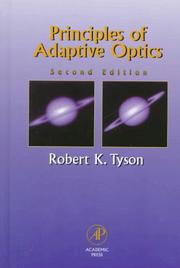
Principles of adaptive optics
Explains techniques used to compensate for atmospheric distortion that can otherwise reduce laser effectiveness.

Laser beam propagation through random media
Directly explains the propagation losses and beam distortion mechanisms that shrink practical laser range in adverse weather.
eBay marketplace picks
Marketplace Samples
Example marketplace items related to this page. Use the search link to explore similar finds on eBay.

Endnotes
1.
Source: scholar.afit.edu
Link:https://scholar.afit.edu/cgi/viewcontent.cgi?article=1774&context=facpub%2F1000
Source snippet
AFIT ScholarAtmospheric Propagation of High Energy Lasers: Thermal...Thermal blooming is a well documented phenomenon [15], whose releva...
2.
Source: mdpi.com
Link:https://www.mdpi.com/2073-4433/12/7/918
Source snippet
Laser Beam Atmospheric Propagation Modelling for...by T Fahey · 2021 · Cited by 108 — In this paper, the atmospheric radiative transfer...
3.
Source: c4isrnet.com
Title: cloudy and a chance of rain need not sideline high energy lasers
Link:https://www.c4isrnet.com/opinion/2018/02/26/cloudy-and-a-chance-of-rain-need-not-sideline-high-energy-lasers/
Source snippet
Cloudy and a chance of rain need not sideline high-energy...26 Feb 2018 — Under the most adverse conditions (heavy rain, very th...
4.
Source: laserwars.net
Title: navy laser weapons challenges [atmosphere]({{ ‘atmosphere/’ | relative_url }}) fog
Link:https://www.laserwars.net/p/navy-laser-weapons-challenges-atmosphere-fog
Source snippet
The Biggest Challenge for Naval Laser Weapons22 May 2025 — Welcome to the literal fog of war, where high-energy lasers run face-first int...
Published: May 2025
5.
Source: Wikipedia
Title: AN/SEQ-3 Laser Weapon System
Link:https://en.wikipedia.org/wiki/AN/SEQ-3_Laser_Weapon_System
6.
Source: army.mil
Title: developing lasers that pierce fog dust to destroy targets
Link:https://www.army.mil/article/195650/army_developing_lasers_that_pierce_fog_dust_to_destroy_targets
Source snippet
Army developing lasers that pierce fog, dust to destroy targets23 Oct 2017 — A lot of people think that high-energy lasers, or HELs...
7.
Source: laserwars.net
Title: navy solid state laser technology maturation demonstrator crimson dragon
Link:https://www.laserwars.net/p/navy-solid-state-laser-technology-maturation-demonstrator-crimson-dragon
8.
Source: Wikipedia
Title: Laser weapon
Link:https://en.wikipedia.org/wiki/Laser_weapon
Source snippet
Laser weaponOne of the major issues with laser weapons is atmospheric thermal blooming, exacerbated when there is fog, smoke, dust, ra...
9.
Source: Wikipedia
Title: Naval Ravikant
Link:https://en.wikipedia.org/wiki/Naval_Ravikant
Source snippet
Naval RavikantNaval Ravikant (born November 5, 1974) is an Indian-born American entrepreneur and investor. He is the co-founder and ch...
Published: November 5, 1974
10.
Source: journals.ametsoc.org
Link:https://journals.ametsoc.org/view/journals/apme/50/1/2010jamc2482.1.xml
Source snippet
American Meteorological Society JournalsClimate Change: Anticipated Effects on High-Energy Laser...by ST Fiorino · 2011 · Cited by 10 —...
11.
Source: nps.edu
Link:https://nps.edu/web/research/-/propagation-of-high-energy-lasers-for-various-wavelengths-power-levels-and-atmospheric-conditions-2018
Source snippet
The goal is real-time atmospheric characterization to...
12.
Source: pubmed.ncbi.nlm.nih.gov
Link:https://pubmed.ncbi.nlm.nih.gov/26560609/
Source snippet
High-power lasers for directed-energy applicationsby P Sprangle · 2015 · Cited by 288 — In this article, we review and discuss the...
13.
Source: everycrsreport.com
Link:https://www.everycrsreport.com/reports/R41526.html
Source snippet
Every CRS ReportNavy Shipboard Lasers for Surface, Air, and Missile DefenseDec 9, 2010 — atmospheric absorption, scattering, and turbulen...
14.
Source: files01.core.ac.uk
Link:https://files01.core.ac.uk/download/pdf/36710555.pdf
Source snippet
Analysis of High Energy Laser Weapon Employment from a...by CN ANG · 2012 · Cited by 20 — a 100 kW power laser would be adequate aga...
15.
Source: onr.navy.mil
Link:https://www.onr.navy.mil/organization/departments/code-35/division-353/directed-energy-weapons-cdew-and-high-energy-lasers
Source snippet
Office of Naval ResearchCounter Directed Energy Weapons and High Energy LasersNavy DEWs include systems that use high-energy lasers (HEL)...
16.
Source: nps.edu
Link:https://nps.edu/web/nps-video-portal/-/sggm41j3boijddtwzbd880any7ict37
Source snippet
n code TBWaveCalc by adjusting the coefficients of an analytical formula...
17.
Source: core.ac.uk
Link:https://core.ac.uk/download/pdf/45464786.pdf
Source snippet
An improved thermal blooming model for the laser...by JC Collins · 2016 · Cited by 8 — ANCHOR, a laser performance scaling code develope...
18.
Source: everycrsreport.com
Link:https://www.everycrsreport.com/files/20140731_R41526_fd8315d8b948d04e4df89f7f56f189fa20dc1a17.html
Source snippet
HTMLNavy Shipboard Lasers for Surface, Air, and. Missile Defense: Background and Issues for. Congress Ronald O'Rourke Specialist in Naval...
Additional References
19.
Source: researchgate.net
Link:https://www.researchgate.net/publication/235041191_Atmospheric_Propagation_of_High_Energy_Lasers_Modeling_Simulation_Tracking_and_Control
Source snippet
(PDF) Atmospheric Propagation of High Energy LasersIn most directed energy applications, laser beams propagate several kms in turbulent a...
20.
Source: researchgate.net
Link:https://www.researchgate.net/publication/221939203_Climate_Change_Anticipated_Effects_on_High-Energy_Laser_Weapon_Systems_in_Maritime_Environments
Source snippet
Climate Change: Anticipated Effects on High-Energy Laser...Aug 26, 2015 — This study quantifies the potential impacts on ship-defense hi...
21.
Source: rafael.co.il
Link:https://www.rafael.co.il/system/naval-iron-beam/
Source snippet
NAVAL IRON BEAM™: Laser Weapon for Naval VesselsThe NAVAL IRON BEAM is a 100kW HEL countermeasure that defeats a wide range of current an...
22.
Source: naval-group.com
Link:https://www.naval-group.com/en
Source snippet
Naval Group: HomepageNaval Group designs, develops, manufactures and maintains equipment for submarines and surface ships around the worl...
23.
Source: scispace.com
Link:https://scispace.com/pdf/high-energy-laser-propagation-in-various-atmospheric-3h3lb87qng.pdf
Source snippet
accounts for the effects of atmospheric diffraction, turbulence, platform...
24.
Source: wired.com
Link:https://www.wired.com/story/laser-wars-us-military-laser-weapons
Source snippet
Arriving overseas in 2022 and actively engaging enemy drones, this marks a significant milestone in laser weapon technology for air defen...
25.
Source: avinc.com
Title: how does weather affect laser weapons a more important question than it seems
Link:https://www.avinc.com/2026/04/08/how-does-weather-affect-laser-weapons-a-more-important-question-than-it-seems/
Source snippet
How Does Weather Affect Laser Weapons? A More...8 Apr 2026 — Similarly, reduced visibility conditions like haze, fog, or cloud cover und...
26.
Source: twz.com
Title: [uss preble]({{ ‘preble-test-2ed0d5/’ | relative_url }}) used helios laser to zap four drones in expanding testing
Link:https://www.twz.com/sea/uss-preble-used-helios-laser-to-zap-four-drones-in-expanding-testing
Source snippet
USS Preble Used HELIOS Laser To Zap Four Drones In...2 Feb 2026 — “The HELIOS weapon system successfully neutralized four drone threats...
27.
Source: onr.navy.mil
Link:https://www.onr.navy.mil/
Source snippet
of Naval Research: HomeThe Office of Naval Research coordinates, executes and promotes the science and technology programs of the United...
28.
Source: news.sky.com
Title: laser cannon deployed by us navy for tests 10449290
Link:https://news.sky.com/story/laser-cannon-deployed-by-us-navy-for-tests-10449290
Source snippet
Cannon Deployed By US Navy For Tests9 Apr 2013 — A prototype of the Laser Weapon System (LaWS) installed on the... The system can be aff...
Topic Tree