Within Field Testing
Why Friendly Radios Are First to Fail
Friendly radios can fail during microwave use because their antennas and cables may turn protection equipment into entry points for energy.
On this page
- Why antennas make radios vulnerable
- What field tests measure beyond survival
- How recovery time changes mission risk
Page outline Jump by section
Introduction
Friendly radios are often among the first systems affected when a high-power microwave (HPM) weapon is used nearby, not because they are poorly designed, but because they are built to do exactly what microwave energy exploits: receive electromagnetic signals. In practical testing, the greatest risk is often not direct exposure of internal electronics. Instead, microwave energy finds efficient entry routes through antennas, feed lines, coaxial cables, and connected wiring. These structures can unintentionally collect energy and deliver it deep into equipment that would otherwise be protected by shielding. Research and military electromagnetic compatibility studies consistently identify antennas and attached conductors as some of the most efficient coupling paths for microwave effects.[ResearchGate+2Imanor]researchgate.netResearch Gate Susceptibility of Electronic Systems to High-Power …A substantial body of experimental studies has demonstrated that HPMResearchGateSusceptibility of Electronic Systems to High-Power …A substantial body of experimental studies has demonstrated that HPM ca…
 For forces evaluating directed energy systems before deployment, understanding how energy enters friendly radios is more important than simply asking whether a radio survives exposure. A radio that reboots for ten seconds at the wrong moment may create a greater operational problem than one that experiences minor hardware stress but continues transmitting.
Why Antennas Make Radios Vulnerable
A radio antenna is intentionally designed to intercept electromagnetic energy from the surrounding environment and transfer that energy into the receiver. This useful feature becomes a liability in an HPM environment.
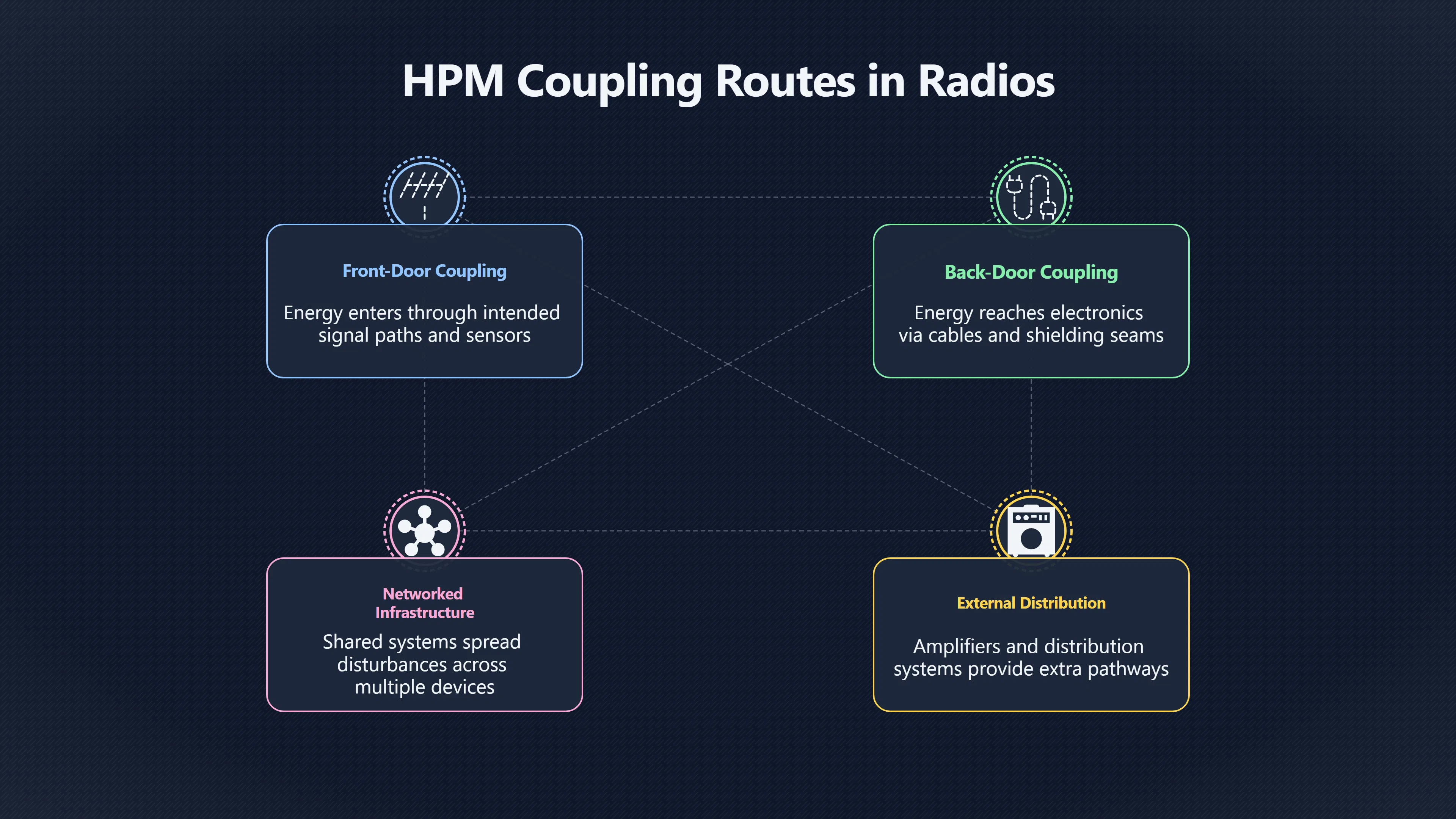
Researchers commonly describe two broad coupling routes. The most important for radios is “front-door coupling”, where microwave energy enters through the normal signal path of antennas and sensors. Unlike shielding around electronic boxes, antennas cannot simply be sealed off without destroying their purpose. As a result, they remain unavoidable entry points.[ResearchGate]researchgate.netResearch Gate Susceptibility of Electronic Systems to High-Power …A substantial body of experimental studies has demonstrated that HPMResearchGateSusceptibility of Electronic Systems to High-Power …A substantial body of experimental studies has demonstrated that HPM ca…
The problem is not limited to situations where the microwave frequency matches the radio’s operating frequency. Studies of HPM susceptibility show that energy can also enter through antennas at frequencies outside the radio’s intended band. Once inside the receiver chain, strong transient voltages and currents may overload components, upset digital logic, saturate amplifiers, or trigger protective circuits.[ResearchGate]researchgate.netResearch Gate Susceptibility of Electronic Systems to High-Power …A substantial body of experimental studies has demonstrated that HPMResearchGateSusceptibility of Electronic Systems to High-Power …A substantial body of experimental studies has demonstrated that HPM ca…
Several characteristics increase vulnerability:
- Large or efficient antennas collect more incident energy.
- Long cable runs can behave like additional receiving structures.
- External amplifiers and antenna distribution systems may provide extra pathways into sensitive electronics.
- Networked radio installations can spread disturbances beyond a single device through shared infrastructure.
This explains why a handheld radio, a vehicle-mounted communications suite, and a command-post antenna mast can show dramatically different responses even when exposed to the same microwave field.[Semantic Scholar]semanticscholar.orgOpen source on semanticscholar.org.
The Hidden Role of Cables and Feed Lines
Many engineers initially focus on the radio itself, but field testing often reveals that attached conductors matter just as much as the receiver.
Microwave energy does not need to strike a circuit board directly. External cables, power leads, antenna feeders, and interconnecting wires can act as unintended receiving antennas. Once energy is induced onto those conductors, it can travel into equipment racks, power supplies, network switches, and radio subsystems.[Imanor+2Semantic Scholar]imanor.gov.maOpen source on imanor.gov.ma.
This mechanism is often described as “back-door coupling”. Rather than entering through the intended signal path, energy reaches electronics through cables, seams, apertures, connectors, or imperfections in shielding. A radio enclosure that appears robust in isolation may become far more vulnerable once connected to operational wiring.[ResearchGate]researchgate.netResearch Gate Susceptibility of Electronic Systems to High-Power …A substantial body of experimental studies has demonstrated that HPMResearchGateSusceptibility of Electronic Systems to High-Power …A substantial body of experimental studies has demonstrated that HPM ca…
The practical consequence is that protection devices themselves can become part of the coupling problem. Surge suppressors, grounding conductors, cable penetrations, and antenna protection hardware may alter how energy propagates through the installation. Their presence does not automatically guarantee immunity; in some configurations they merely redirect energy into different parts of the system. This is one reason military electromagnetic compatibility standards emphasise complete system integration testing rather than component-level certification alone.[S3VI+2Waru University]s3vi.ndc.nasa.gov1 Oct 2010 — This standard contains two sections, the main body and an appendix. The main body of the standard specifies a baseline s…
What Field Tests Measure Beyond Survival
A radio that powers on after exposure has not necessarily passed the test.
Operational evaluations increasingly focus on performance metrics that reveal mission impact. Microwave exposure can create effects ranging from brief interference to complete resets and, in severe cases, permanent damage. Between those extremes lies a large category of temporary disruptions that are often more difficult to assess but highly relevant in military operations.[Journal of Electromagnetic Dominance]jedonline.comhigh power microwave systems getting much much closer to operational statusJournal of Electromagnetic DominanceHigh-Power Microwave Systems – Getting (Much…24 Jan 2023 — HPM weapons can generate a range of eff…
Field trials therefore examine questions such as:
- Does voice traffic remain intelligible?
- Are data links interrupted?
- Does encryption synchronisation survive exposure?
- Does the radio automatically reconnect to the network?
- Are command messages delayed or lost?
- Does the system require operator intervention?
These measurements matter because communication failures often appear before physical damage. Experimental HPM research has repeatedly shown that electronic upset thresholds can occur at lower exposure levels than destructive failures.[ResearchGate+2Mobility Engineering Technology]researchgate.netResearch Gate Susceptibility of Electronic Systems to High-Power …A substantial body of experimental studies has demonstrated that HPMResearchGateSusceptibility of Electronic Systems to High-Power …A substantial body of experimental studies has demonstrated that HPM ca…
A radio that survives every pulse but repeatedly loses network connectivity may still be operationally unacceptable.
How Recovery Time Changes Mission Risk
Recovery time is frequently the overlooked metric in microwave testing.
When a friendly radio experiences an HPM-induced upset, the resulting outage may last milliseconds, seconds, or much longer depending on system design. Some devices recover automatically after transient overloads. Others reboot, reload software, reacquire network timing, or require manual intervention. Research on HPM effects notes that pulse characteristics and system architecture strongly influence whether disruptions are momentary or persistent.[ResearchGate]researchgate.netResearch Gate Susceptibility of Electronic Systems to High-Power …A substantial body of experimental studies has demonstrated that HPMResearchGateSusceptibility of Electronic Systems to High-Power …A substantial body of experimental studies has demonstrated that HPM ca…
From a mission perspective, the difference is enormous.
A one-second interruption might be unnoticed during routine communications. The same interruption during air-defence coordination, drone tracking, close-air-support control, or emergency response could create a critical gap in situational awareness. A thirty-second reboot can be far more damaging operationally than a minor reduction in receiver sensitivity. This is why modern HPM assessments increasingly focus on resilience and recovery behaviour rather than simple pass-fail survival criteria.[NATO Store+2DSIAC]sto.nato.intNATO StoreTactical Implications of High Power MicrowavesThe Workshop pro-vided clear evidence of how unprotected electronic systems locat…
Testing therefore seeks to determine not only whether microwave energy can enter a radio, but also how quickly the communications function returns once the disturbance ends.
Why Friendly Radios Often Fail Before Other Systems
The central lesson from decades of HPM susceptibility research is that radios possess a built-in exposure pathway that many other electronic systems lack. Antennas are designed to gather electromagnetic energy efficiently. Cables and feed lines extend that collection area. Together they create natural coupling routes that allow microwave energy to bypass much of the protection surrounding internal electronics.[ResearchGate+2Academia]researchgate.netResearch Gate Susceptibility of Electronic Systems to High-Power …A substantial body of experimental studies has demonstrated that HPMResearchGateSusceptibility of Electronic Systems to High-Power …A substantial body of experimental studies has demonstrated that HPM ca…
As a result, communications equipment frequently serves as an early indicator of compatibility problems during directed-energy testing. The key question is not whether microwave energy can reach a friendly radio—it often can. The critical issue is how much energy couples into the system, what operational effects appear, and how quickly communications capability recovers once exposure ends.[Imanor+2NATO Store]imanor.gov.maOpen source on imanor.gov.ma.
Amazon book picks
Further Reading
Books and field guides related to Why Friendly Radios Are First to Fail. Use these as the next step if you want deeper reading beyond the article.
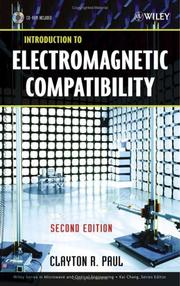
Introduction to electromagnetic compatibility
Explains antenna coupling and interference mechanisms that make radios vulnerable.

EMC for product designers
Discusses protection, shielding and cabling issues affecting radio resilience.

Practical antenna handbook
Provides antenna fundamentals essential to understanding front-door coupling.
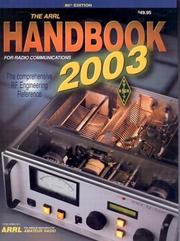
The Arrl Handbook for Radio Communications (ARRL Handbook for...
First published 2002.
eBay marketplace picks
Marketplace Samples
Example marketplace items related to this page. Use the search link to explore similar finds on eBay.

Endnotes
1.
Source: researchgate.net
Link:https://www.researchgate.net/publication/3056672Susceptibility_of_Electronic_Systems_to_High-Power[Microwaves
Source snippet
Susceptibility of Electronic Systems to High-Power...A substantial body of experimental studies has demonstrated that HPM ca...
2.
Source: academia.edu
Link:https://www.academia.edu/88333552/Susceptibility_of_Electronic_Systems_to_High_Power_Microwaves_Summary_of_Test_Experience
Source snippet
ted front-door coupling, or as back-door coupling, i.e., through imperfect shields...Read more...
3.
Source: waru.edu
Link:https://www.waru.edu/sites/default/files/Migrated/CopDocuments/MIL-STD-464.pdf
Source snippet
(weapon) capable of emitting high power or high energy densities.Read more...
4.
Source: dsiac.dtic.mil
Title: DSIACSurvivability Against High-Power, Radio Frequency
Link:https://dsiac.dtic.mil/webinars/survivability-against-high-power-radio-frequency-microwave-directed-energy-weapons/
Source snippet
These electronic devices are known to be potentially vulnerable to high-power electromagnetic sources and environments, such as thos...
5.
Source: sto.nato.int
Link:https://www.sto.nato.int/document/tactical-implications-of-high-power-microwaves-3/
Source snippet
NATO StoreTactical Implications of High Power MicrowavesThe Workshop pro-vided clear evidence of how unprotected electronic systems locat...
6.
Source: electronic.se
Title: standards methods and issues of destructive high power microwave testing
Link:https://www.electronic.se/2015/05/26/standards-methods-and-issues-of-destructive-high-power-microwave-testing/
Source snippet
Electronic EnvironmentStandards, Methods and Issues of Destructive High-Power...26 May 2015 — In this article, we present issues with hi...
Published: May 2015
7.
Source: researchgate.net
Link:https://www.researchgate.net/publication/235113029_High_Altitude_Electromagnetic_Pulse_HEMP_and_High_Power_Microwave_HPM_Devices_Threat_Assessments
Source snippet
erload or disrupt at a distance numerous electrical systems and high...Read more...
8.
Source: researchgate.net
Link:https://www.researchgate.net/profile/Hans_Schmidt8/publication/234213769_Coupling_measurements_on_intelligent_missiles_at_microwave_frequencies/links/5417f9630cf2f48c74a42889/Coupling-measurements-on-intelligent-missiles-at-microwave-frequencies.pdf
Source snippet
ticated electronics in systems, and to the...
9.
Source: imanor.gov.ma
Link:https://imanor.gov.ma/wp-content/uploads/2022/10/06.0.119-iec61000-1-5-tred1.0en.pdf
10.
Source: semanticscholar.org
Link:https://www.semanticscholar.org/paper/HPM-effects-on-electronic-components-and-the-of-in-Goransson/198627ac710dd87ec922eb93b0d2a7bb35585d0b
11.
Source: s3vi.ndc.nasa.gov
Link:https://s3vi.ndc.nasa.gov/ssri-kb/static/resources/MIL-STD-464C.pdf
Source snippet
1 Oct 2010 — This standard contains two sections, the main body and an appendix. The main body of the standard specifies a baseline s...
12.
Source: jedonline.com
Title: high power microwave systems getting much much closer to operational status
Link:https://www.jedonline.com/2023/01/24/high-power-microwave-systems-getting-much-much-closer-to-operational-status/
Source snippet
Journal of Electromagnetic DominanceHigh-Power Microwave Systems – Getting (Much...24 Jan 2023 — HPM weapons can generate a range of eff...
13.
Source: mobilityengineeringtech.com
Title: 4871 afrl 0094
Link:https://www.mobilityengineeringtech.com/component/content/article/4871-afrl-0094
Source snippet
Mobility [Engineering]({{ 'engineering/' | relative_url }}) TechnologyEffects of High-Power Microwave Pulses on Electronic...1 Aug 2008 — This research can be applied to desig...
14.
Source: yumpu.com
Title: MI L-STD-464
Link:https://www.yumpu.com/en/document/view/32350576/mil-std-464-acqnotescom
Source snippet
MIL-STD-464 - AcqNotes.com6 Sept 2014 — High power microwave (HPM) sources have been under investigation for several years as<br />. pote...
Additional References
15.
Source: linkedin.com
Link:https://www.linkedin.com/pulse/ew-hpm-milstd461-milstd464-robi-sen-cltgc
Source snippet
EW, HPM, MIL‑STD‑461, and MIL‑STD‑464MIL‑STD‑461 addresses unintentional electromagnetic environments: radars, transmitters, natural phen...
16.
Source: publica.fraunhofer.de
Link:https://publica.fraunhofer.de/bitstreams/5781f3af-7dee-4d17-9cf2-438cb2396eb3/download
Source snippet
Threat of High Power Microwaves to Infrastructureby M Suhrke · Cited by 1 — IEMI [intentional electromagnetic interference] is the intent...
17.
Source: publications.tno.nl
Link:https://publications.tno.nl/publication/100952/OFKZam/adami-2011
Source snippet
of High Power MicrowavesWe discuss HPM detection principles as well as capabilities and limitations of existing HPM detectors. Then we de...
18.
Source: scribd.com
Link:https://www.scribd.com/document/170820534/Mil-Std-464a
19.
Source: intrinsicallysafestore.com
Title: difference between mil std 461 and mil std 464
Link:https://intrinsicallysafestore.com/blog/difference-between-mil-std-461-and-mil-std-464/?srsltid=AfmBOopMGPh05PgNmLUfWVsKt2FVgwre86r4EerJJ1df0huQAisB4NIE
Source snippet
MIL-STD-461 vs. MIL-STD-4649 Jul 2024 — MIL-STD-464 establishes criteria for the electromagnetic compatibility (EMC) including: Emission...
20.
Source: incompliancemag.com
Title: mil std 464d a review of recent changes
Link:https://incompliancemag.com/mil-std-464d-a-review-of-recent-changes/
Source snippet
In Compliance MagazineMIL-STD-464D: A Review of Recent Changes31 Mar 2021 — In this article, we detail the key changes between MIL-STD-46...
21.
Source: everythingrf.com
Link:https://www.everythingrf.com/community/high-power-microwave-hpm-technology-in-modern-defense-applications-capabilities-challenges
Source snippet
When exposed to high-field-strength...Read more...
22.
Source: article.sapub.org
Link:https://article.sapub.org/10.5923.j.ijea.20120204.02.html
Source snippet
Power Microwave Effects on Computer NetworksImmunity was becoming higher for higher frequencies due to less effective coupling of radiate...
23.
Source: interferencetechnology.com
Title: 2016 IT Military EMC Guide
Link:https://interferencetechnology.com/wp-content/uploads/2016/10/2016-IT-Military-EMC-Guide.pdf
Source snippet
2016 MILITARY EMC GUIDEMIL-STD-464 was developed as an “Interface Standard” to allow us- age without a waiver.The E3 (Electromagnetic En...
24.
Source: everycrsreport.com
Link:https://www.everycrsreport.com/files/20060414_RL32544_6cdadf2d0002003bc6a06200e48f72b3ed7ca11c.pdf
Source snippet
(HPM) can also produce intense energy effects, including instantaneous electromagnetic pulses, and are created through...
Topic Tree